






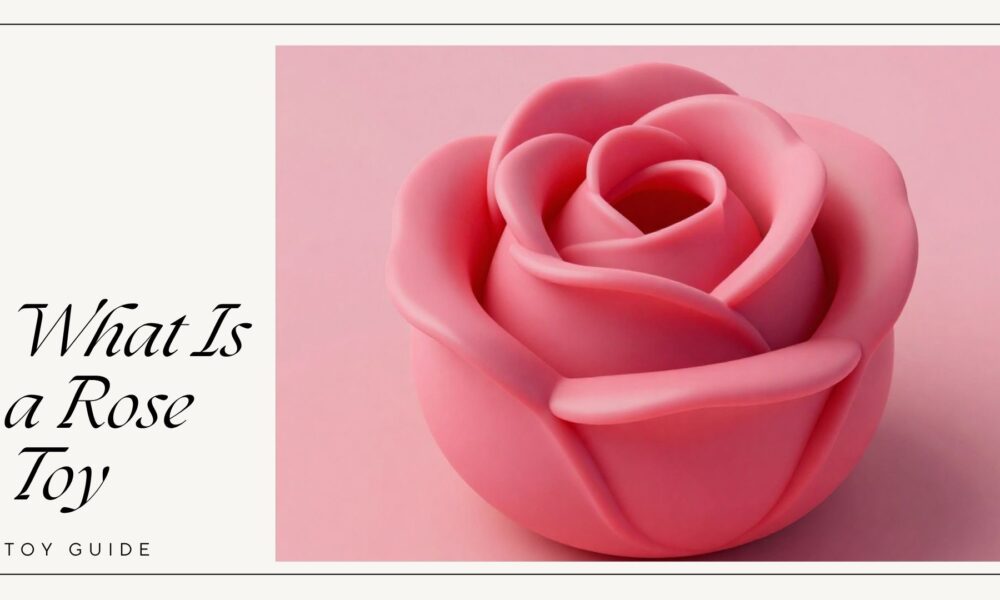
I didn’t plan to fall down a rabbit hole about a tiny flower-shaped gadget, but here we are.
Table Of Content
- What a Rose Toy Actually Is (Without the Hype)
- Why It Feels Different (and Why That Matters)
- The TikTok Effect (and Why It Blew Up So Fast)
- It’s Not Just About the Sensation
- How It Works (Without Turning This Into a Manual)
- It’s More Versatile Than It Looks
- Why Some People Love It (and Some Don’t)
- The Discreet Factor No One Talks About Enough
- A Small Reality Check (Because the Internet Gets Dramatic)
- So… What Is a Rose Toy, Really?
- Final Thoughts (The Kind You Don’t Usually See in Reviews)
The first time I heard about a “rose toy,” it sounded like one of those internet trends that disappears as quickly as it shows up. Something cute, slightly overhyped, and probably not worth thinking about twice. But then it kept popping up. Reviews, casual mentions, people talking about it like it changed something for them.
At some point, curiosity wins. It always does.
So I started asking the obvious question: what is a rose toy, really? And more importantly… why are people reacting to it so differently than to every other vibrator that came before it?
What a Rose Toy Actually Is (Without the Hype)
At its core, a rose toy is a small, flower-shaped sex toy designed for external stimulation. It usually looks like a decorative rose, which honestly feels like part of its appeal. It doesn’t scream “sex toy” in the way older designs used to.
But the real difference isn’t the shape. It’s what it does.
Most rose toys use something called air pulse or suction technology. Instead of relying only on vibration, they create a soft pulsing airflow that stimulates the clitoris without direct contact. It’s a completely different sensation than what most people expect from traditional vibrators.
And that’s where things get interesting.
“It doesn’t feel like pressure. It feels like attention.”
That’s the closest way I can describe what people mean when they talk about it.
Why It Feels Different (and Why That Matters)
I think a lot of us grew up assuming all sex toys basically do the same thing, just louder or faster or more expensive. The rose toy kind of breaks that idea.
Instead of direct friction or buzzing, it focuses on indirect stimulation. That means the sensation is often softer, more focused, and sometimes… more intense in a quieter way.
Here’s a simple way to understand the difference:
| Feature | Traditional Vibrator | Rose Toy |
|---|---|---|
| Sensation type | Direct vibration | Air pulse / suction |
| Contact | Usually direct | Often indirect |
| Intensity feel | Buzzing, surface-level | Deeper, more targeted |
| Learning curve | Low | Slightly higher (placement matters) |
It’s not about one being “better.” It’s more like… they speak different languages.
And depending on your body, one might make more sense than the other.
The TikTok Effect (and Why It Blew Up So Fast)
I can’t pretend this didn’t play a role. The rose toy didn’t quietly become popular. It exploded.
A big part of that came from social platforms, especially TikTok, where people started sharing reactions that were… let’s just say, very convincing. Not overly explicit, just real enough to make you pause.
Suddenly, something that looked harmless and almost decorative was being described as surprisingly powerful.
And there’s something about that contrast that people love.
Cute + discreet + unexpectedly effective = instant curiosity.
Also, let’s be honest. A toy that doesn’t look intimidating or overly mechanical is easier to approach, especially if you’re new to all of this.
It’s Not Just About the Sensation
This is the part people don’t always talk about, but I think it matters more than the tech.
The rose toy feels less clinical. Less… performative.
There’s something about holding something that looks soft and almost playful that changes your mindset a little. It doesn’t feel like you’re using a tool. It feels more like you’re exploring something.
That psychological shift is subtle, but it’s real.
And for a lot of people, especially if they’re just starting to explore their bodies, that makes a difference.
How It Works (Without Turning This Into a Manual)
Most rose toys follow the same basic idea.
There’s a small opening at the center of the “rose,” and that’s where the suction happens. When you turn it on, it creates rhythmic pulses of air that stimulate the area without needing to press hard or move constantly.
It usually comes with multiple intensity levels, and from what I’ve seen (and read), starting low is the move. Jumping straight into the strongest setting tends to be… overwhelming.
There’s also a bit of a learning curve. Placement matters more than with regular vibrators. It’s not about pressing harder, it’s about finding the spot where the sensation feels right.
And yes, people often mention using a bit of lubricant to make everything smoother and more comfortable.
It’s More Versatile Than It Looks
This surprised me.
Even though it’s designed for clitoral stimulation, people don’t always use it just one way. Some experiment with different areas of the body, others use it during partnered moments, and some keep it as something purely personal.
It’s not locked into one experience, which makes it feel less limiting.
And because most versions are waterproof, people end up using it in places like the shower or bath without worrying about it.
There’s something oddly freeing about that.
Why Some People Love It (and Some Don’t)
This is where expectations matter.
A lot of people genuinely love the rose toy because it offers a different kind of stimulation. It can feel more precise, less numbing, and sometimes more intense in a way that builds instead of overwhelms.
But not everyone clicks with it.
Some people prefer direct vibration. Some find the suction sensation too unfamiliar at first. And some just don’t want to deal with figuring out positioning.
And that’s fine.
There’s this weird pressure online to act like one product is universally perfect, but bodies don’t work like that.
The Discreet Factor No One Talks About Enough
One thing I quietly appreciate about the rose toy is how easy it is to leave out without it feeling… obvious.
It really does look like a small decorative object. Not identical to a real rose, obviously, but enough that it doesn’t draw attention.
That matters more than people admit.
There’s a difference between hiding something and just not worrying about it being seen.
A Small Reality Check (Because the Internet Gets Dramatic)
You’ve probably seen phrases like “life-changing” or “instant results.”
Let’s just dial that down slightly.
The rose toy can feel very different and very good for some people. But it’s not magic. It still depends on your preferences, your comfort level, and how you use it.
Sometimes the hype makes it sound like a guaranteed experience, and that’s not how any of this works.
What it actually offers is an alternative. And for some people, that alternative just happens to fit better.
So… What Is a Rose Toy, Really?
If I had to explain it in the simplest, most honest way:
It’s a small, rose-shaped device that uses air pulses instead of traditional vibration to create a more focused and indirect kind of stimulation.
But that definition misses the point a little.
Because what people are really reacting to isn’t just the technology. It’s the way it changes the experience. Softer, more intentional, less mechanical.
And maybe that’s why it stuck around instead of fading like every other trend.
Final Thoughts (The Kind You Don’t Usually See in Reviews)
I went into this expecting a gimmick.
Something cute, slightly overhyped, and easy to ignore.
Instead, I found something that actually made me rethink how different these experiences can feel. Not better or worse, just… different in a way that makes you pay attention.
And honestly, I think that’s why the rose toy keeps coming up in conversations.
Not because it’s perfect.
But because it made people curious again.



No Comment! Be the first one.