





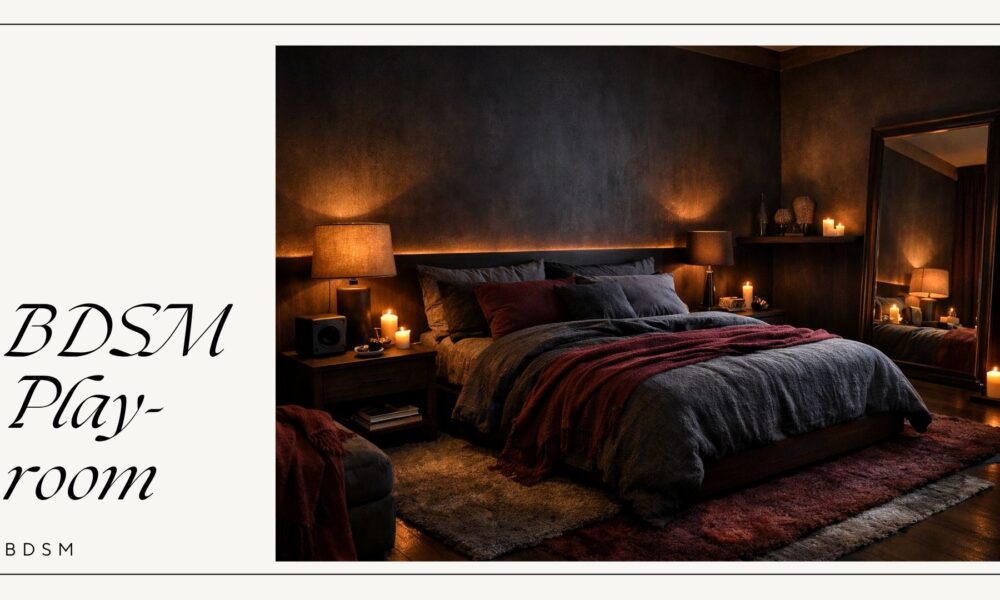
I used to think a BDSM playroom had to look like something out of a movie. Dark walls, complicated equipment, maybe a dramatic spotlight situation for no reason. It felt like something other people had, not something you quietly build into your own life.
Table Of Content
- What a BDSM Playroom Actually Is (and Isn’t)
- Choosing the Right Space (Without Overthinking It)
- Sound changes everything
- Temperature is either invisible or completely distracting
- Space should feel contained, not empty
- Designing the Room So It Actually Affects You
- Light is doing more work than you think
- Color matters, but not in a dramatic way
- Mirrors are weirdly powerful
- What You Actually Need (and What You Don’t)
- Core elements vs “maybe later”
- Quality quietly changes everything
- Setting the Mood Without Making It Obvious
- Scent creates memory faster than anything else
- Sound keeps you inside the moment
- Texture makes everything feel more deliberate
- The Part Nobody Talks About: Removing the Wrong Things
- A Small Reality Check Most People Need
- Final Thoughts
Then I realized something slightly embarrassing: the problem wasn’t access, money, or even space. It was intention.
Most of us don’t lack the ability to create a better sexual space. We just keep trying to squeeze it into rooms that are already doing five other jobs. Laundry room. Office. Bedroom that also holds three versions of your past decisions. And then we expect the mood to magically show up.
It doesn’t.
A BDSM playroom works because it separates things. It says: this is where we explore, and nowhere else interferes.
Once I understood that, everything became simpler. Not easier, but clearer.
What a BDSM Playroom Actually Is (and Isn’t)
A BDSM playroom sounds intense, but it’s not automatically extreme. It’s just a space designed on purpose.
That’s the part people skip.
It doesn’t need to be elaborate. It doesn’t need to impress anyone. It just needs to support whatever dynamic you’re curious about, whether that’s light restraint, sensory play, power exchange, or just having a room where intimacy isn’t squeezed between notifications.
I remember thinking, “I’ll build it once I know exactly what I want.”
That was backwards.
You figure out what you want by using the space, not by planning it perfectly.
Some rooms grow into themselves. This is one of them.
Choosing the Right Space (Without Overthinking It)
The first mistake is assuming you need a “perfect” room. You don’t. You need a room that lets you relax your guard.
For me, the biggest factor wasn’t size. It was separation.
A spare bedroom worked better than the main bedroom, even though it was smaller. It didn’t carry the weight of everyday life. No laptop. No half-finished thoughts sitting on a chair. Just… space.
There are a few things that quietly matter more than people expect.
Sound changes everything
If you feel like someone might hear you, your body knows. Even if you try to ignore it.
I didn’t realize how much that mattered until I moved things into a more isolated room. The difference wasn’t subtle. It was immediate.
Simple fixes help. Thick curtains, rugs, even rearranging furniture. You don’t need studio-level soundproofing. You just need to stop feeling watched.
Temperature is either invisible or completely distracting
There’s no middle ground. If the room is slightly too cold, you’ll notice it constantly. Same if it’s too warm.
It’s such a boring detail that people ignore it, which is exactly why it ruins things.
Space should feel contained, not empty
Bigger isn’t better here. A room that’s too large can feel oddly disconnected.
A medium-sized space with defined areas feels more immersive. You don’t want to feel like you’re performing in a hall. You want to feel held inside the environment.
Designing the Room So It Actually Affects You
This is where people either overcomplicate everything or do almost nothing.
The goal isn’t aesthetics. It’s state change.
When you walk into the room, something should shift. Not dramatically. Just enough that your brain stops thinking about emails and starts paying attention to your body.
Light is doing more work than you think
Bright overhead lighting is the fastest way to kill any atmosphere.
I switched to softer, warmer lighting and suddenly everything felt slower, more intentional. It wasn’t about making things look “sexy.” It was about removing harshness.
Dimmable lights help, but even just layering lamps instead of using one main light changes the tone completely.
Color matters, but not in a dramatic way
Darker tones tend to feel more contained. That’s useful. But you don’t need to repaint the entire room black like you’re auditioning for a very specific lifestyle.
Even small changes like darker bedding, textured fabrics, or a deeper color palette can shift the feeling without turning the room into a cliché.
Mirrors are weirdly powerful
I hesitated on this one. It felt a bit… performative.
It isn’t.
Seeing yourself changes how present you are. It pulls you out of your head and into what’s actually happening. Not constantly, not in a distracting way. Just enough to make things feel more real.
What You Actually Need (and What You Don’t)
This is where it’s easy to go off track.
You don’t need everything. You need the right things for you.
A lot of people build a BDSM playroom like they’re stocking a warehouse. Then they use about 20% of it.
That’s expensive clutter with emotional expectations attached.
Here’s how I started thinking about it instead.
Core elements vs “maybe later”
| Category | What actually matters | What can wait |
|---|---|---|
| Surface | A stable bed or main area | Specialized furniture |
| Restraints | Basic, comfortable options | Complex setups |
| Sensation | One or two quality tools | Large collections |
| Atmosphere | Lighting, scent, sound | Decorative extras |
The difference between a good setup and an overwhelming one is restraint. Not the fun kind. The practical kind.
Quality quietly changes everything
Cheap equipment feels cheap. Not just physically, but mentally.
If something feels unreliable, you don’t fully relax. Even if nothing goes wrong.
I learned that the hard way. Once.
After that, I stopped trying to “test” things with low-quality options. It’s not worth the distraction.
Setting the Mood Without Making It Obvious
Mood isn’t something you turn on. It’s something you build gradually.
The smallest details tend to matter the most.
Scent creates memory faster than anything else
I didn’t expect this to work, but it does.
Using the same scent consistently builds an association over time. You walk into the room, smell it, and your body already knows what’s coming.
It’s subtle, but it’s effective.
Sound keeps you inside the moment
Silence can feel exposed. Random noise feels distracting.
A dedicated playlist fixes both.
Not something you’d listen to normally. Something that belongs to the room.
Texture makes everything feel more deliberate
Soft rugs, heavier fabrics, even the feel of the sheets. It all adds up.
This isn’t about luxury. It’s about sensory continuity. When everything feels intentional, you respond differently.
The Part Nobody Talks About: Removing the Wrong Things
This is the least exciting step and the most important one.
A BDSM playroom isn’t just about what you add. It’s about what you remove.
Anything that reminds you of daily life breaks the illusion.
Phones are the worst offender. Even if you’re not using them, they sit there like a quiet reminder of everything else.
I started leaving mine outside the room.
That alone changed more than any piece of equipment ever did.
No notifications. No distractions. No mental escape hatch.
Just presence.
A Small Reality Check Most People Need
It’s easy to think the room is the thing that changes everything.
It isn’t.
The room supports what you bring into it.
If you’re distracted, disconnected, or unsure, no setup fixes that completely. It can help, but it won’t carry the entire experience.
The space amplifies you. It doesn’t replace you.
That’s slightly inconvenient, but also kind of reassuring.
You don’t need perfection. You just need to show up a little more intentionally than before.
Final Thoughts
Building a BDSM playroom sounds like a big, dramatic project.
It’s not.
It’s a series of small decisions that slowly shift how you experience intimacy.
A different room. Better lighting. Fewer distractions. More intention.
That’s it.
And somehow, that’s enough to make everything feel different.
Not louder. Not more extreme. Just more present.
Which, if I’m being honest, was the part I didn’t realize I was missing.





No Comment! Be the first one.