




I didn’t grow up hearing much about bisexuality.
Table Of Content
- It’s Not Just About Visibility (That’s the Easy Part)
- The Part People Don’t Talk About Enough
- The Myths That Still Won’t Die
- “It’s just confusion”
- “It’s a phase”
- “It’s always 50/50”
- “Your partner defines what you are”
- “Bisexual people cheat more”
- Why These Myths Actually Matter
- Attraction Isn’t That Neat (And That’s Okay)
- A Simple Way I Started Thinking About It
- Why This Month Feels Bigger Than It Sounds
- Where I Landed With It
- A Thought to Leave You With
It was always framed like a choice between two clear options. Straight or gay. Pick one, stick to it, and don’t make it complicated for everyone else.
So when I first heard about Bisexual Health Awareness Month, I didn’t immediately connect with it. It sounded like one of those things you’re supposed to care about, but no one really explains why.
And honestly, I think a lot of people are in that exact spot.
They’ve heard the term. Maybe they’ve even shared a post about it. But if you ask them what it actually means… it gets vague pretty quickly.
It’s Not Just About Visibility (That’s the Easy Part)
Visibility is the part everyone understands.
More representation, more conversations, more people saying “this exists.”
But Bisexual Health Awareness Month isn’t just about being seen. It’s about what happens when people aren’t fully understood, even when they’re visible.
Because here’s the uncomfortable part:
Bisexual people are often overlooked in ways that aren’t obvious at first. Not always rejected. Not always attacked. Just… misunderstood, simplified, or quietly dismissed.
And that has real impact.
Not just socially, but mentally and emotionally too.
“You can be visible and still feel invisible at the same time.”
That idea stuck with me. Because it explains something I hadn’t really thought about before.
The Part People Don’t Talk About Enough
There’s actual data behind this, and it’s not great.
Bisexual individuals report higher rates of anxiety, depression, and poorer overall health compared to both straight and gay individuals.
Not because of who they are.
But because of how often their identity gets questioned, minimized, or misunderstood.
If you want to look into that side more, the CDC has a breakdown here:
LGBT health disparities overview
And once you see that, this month stops feeling like a “nice awareness campaign” and starts feeling necessary.
The Myths That Still Won’t Die
This is where things get… repetitive.
Not in a boring way, but in a “why are we still here?” kind of way.
Because the same myths keep showing up, just reworded slightly depending on who’s saying them.
And they might sound harmless on the surface. But they stack up over time.
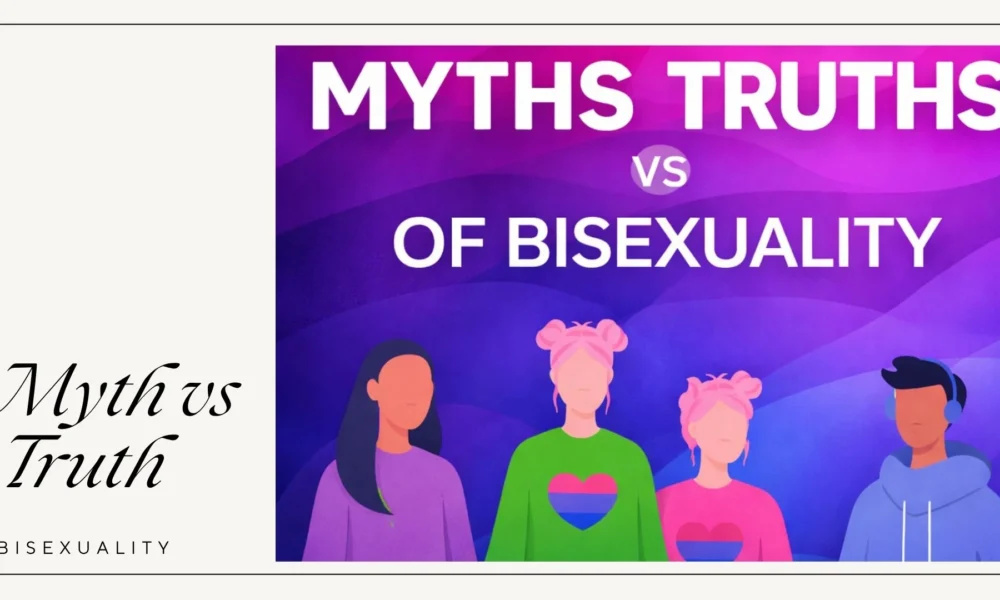
“It’s just confusion”
This one assumes that attraction has to be fully defined and stable to be valid.
If it’s not clear, it must not be real.
Truth:
Being attracted to more than one gender isn’t confusion. It’s just a different way of experiencing attraction.
“It’s a phase”
This one feels almost… dismissive.
Like someone’s identity is just a temporary stop on the way to something more “serious.”
Truth:
People grow and evolve, sure. But bisexuality itself isn’t a phase you eventually outgrow.
“It’s always 50/50”
This is where people try to turn attraction into math.
Balanced. Equal. Predictable.
Truth:
Attraction doesn’t follow a formula. It can shift, lean, and change over time—and still be completely valid.
“Your partner defines what you are”
If you’re with a man, you’re straight.
If you’re with a woman, you’re gay.
Simple logic. Wrong logic.
Truth:
Your relationship doesn’t define your identity. It reflects one part of it, not the whole.
“Bisexual people cheat more”
This one somehow refuses to die.
Like having more potential attraction automatically means less loyalty.
Truth:
Cheating is about behavior, not orientation. Always has been.
Why These Myths Actually Matter
It’s easy to brush these off as just “opinions” or “misunderstandings.”
But they shape how people are treated.
They influence whether someone feels taken seriously, whether they feel safe expressing themselves, whether they constantly have to explain or defend who they are.
And over time, that adds up.
This is where Bisexual Health Awareness Month becomes more than just a label.
It becomes a moment to actually question the things people have been repeating without thinking.
Attraction Isn’t That Neat (And That’s Okay)
I think a lot of confusion comes from how people expect attraction to behave.
Clean. Consistent. Easy to define.
But if you look at your own experiences, it’s rarely that simple.
Preferences change. Feelings shift. People surprise you.
So expecting bisexuality to fit into a perfectly balanced, predictable model doesn’t really make sense.
And maybe that’s the point.
A Simple Way I Started Thinking About It
At some point, I stopped trying to “figure it out” perfectly and started looking at it differently.
| Assumption | Reality |
|---|---|
| Attraction should be fixed | Attraction can shift |
| Identity depends on your partner | Identity exists beyond relationships |
| More attraction = less commitment | Commitment is a personal choice |
It’s not some deep theory. It’s just… a more honest way of looking at it.
Why This Month Feels Bigger Than It Sounds
At first, I thought this was just about bisexuality.
But it’s not only that.
It’s about how we react to anything that doesn’t fit into simple categories.
How quickly we try to label, define, and simplify people just to make things easier for ourselves.
And how rarely we stop and question those assumptions.
Where I Landed With It
If I had to put it into one thought, it would be this:
Not everything needs to be simplified to be valid.
That applies to sexuality, sure.
But also to people in general.
A Thought to Leave You With
Bisexual Health Awareness Month isn’t asking people to suddenly understand everything.
It’s asking people to pause.
To notice the assumptions they’ve been repeating.
To realize that something being unfamiliar doesn’t make it wrong.
And maybe… to get a little more comfortable with things that don’t fit into clean, predictable boxes.
Because honestly, most of us don’t either.

No Comment! Be the first one.