





I’ll be honest, the first time I heard the phrase clit clamp, I paused for a second. It sounds… intense. Slightly intimidating. The kind of thing you assume belongs in someone else’s bedroom, not yours.
Table Of Content
- What a clit clamp actually is (without the drama)
- The part people worry about: does a clit clamp hurt?
- Why anyone would want to try a clit clamp
- How it actually fits into a real experience
- The different types (and why they matter more than you think)
- Something no one really says out loud
- A small but important detail: safety and awareness
- Where curiosity usually leads
- A quiet conclusion
But curiosity has a way of creeping in.
At some point, I realized most of what I felt wasn’t based on experience, just the name. And names can be misleading. A clit clamp isn’t about pain in the way people assume. It’s more about control, timing, and that strange build-up where your body starts paying attention in a very focused way.
Once I actually looked into it, it stopped feeling extreme and started feeling… interesting.
What a clit clamp actually is (without the drama)
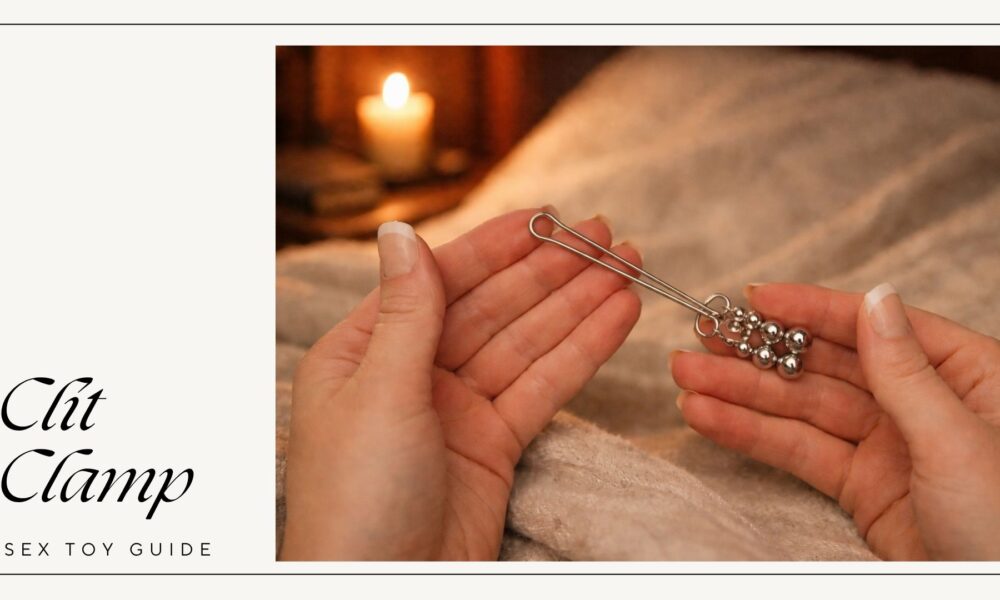
A clit clamp is a small device that applies light, controlled pressure to the clitoris or the area just around it. That’s it. No hidden complexity, no secret mechanism.
The part that surprised me is that the sensation isn’t really about wearing it. It’s about what happens after.
There’s this temporary restriction, then release. And when that release happens, the sensitivity spikes. Everything feels sharper, more noticeable, almost like your body suddenly decided to turn the volume way up.
“It’s less about intensity in the moment, more about what you unlock afterward.”
That shift in perspective made it feel less like something extreme and more like something intentional. Like you’re setting the stage rather than jumping straight to the main act.
The part people worry about: does a clit clamp hurt?
This is usually where people hesitate, and it makes sense.
Pain is not the goal here. Pressure is.
There’s a difference, and your body knows it immediately. Pressure builds slowly. Pain feels wrong almost instantly. If it crosses into pain, something isn’t right. Either too tight, wrong position, or just not your thing. And that’s fine.
From everything I’ve seen and read, the people who actually enjoy clit clamps aren’t chasing discomfort. They’re chasing contrast. That moment where sensation shifts from quiet to intense.
And honestly, that sounds a lot more appealing than the scary version people imagine.
Why anyone would want to try a clit clamp
This is where it gets more psychological than physical.
A clit clamp changes the pacing. It forces you to slow down, to build anticipation instead of rushing through it. And that alone can shift the entire experience.
It’s not just about sensation. It’s about awareness.
Some people describe it as making everything feel more focused. Others say it adds a kind of tension that makes the release feel more satisfying. Not bigger in a dramatic way, just… deeper. More noticeable.
There’s also an element of control. Either giving it or taking it, depending on how you approach it. And that dynamic, even in a small way, can change how you experience intimacy.
How it actually fits into a real experience
This is where most explanations fall apart. They either get too technical or too vague.
In reality, it’s simpler.
You don’t start with a clit clamp. You arrive there.
The body needs to be warmed up first. Otherwise, everything feels too sensitive in the wrong way. When there’s already arousal, the clamp becomes part of the experience instead of an interruption.
And timing matters. Leaving it on too long doesn’t make it better. It just dulls the effect. The sweet spot is short enough to build tension, but not long enough to numb anything.
Then comes the part that actually matters. The removal.
That shift, from restricted to fully responsive, is where everything changes. It’s the moment the whole thing was leading to.
If you think about it, it’s almost structured. Build, hold, release.
The different types (and why they matter more than you think)
Not all clit clamps feel the same, and this is where choosing the right one actually matters.
| Type | Feel | Control Level | Good for |
|---|---|---|---|
| Tweezer-style | Light to adjustable pressure | High | First-time use, experimenting slowly |
| Beaded/slide designs | More sensation across surrounding areas | Medium | Foreplay, layering sensations |
| Crocodile-style | Strong, direct pressure | Low to medium (depends on model) | More experienced users |
The tweezer style is usually where people start, mostly because it gives you control. You can adjust it gradually instead of committing to a fixed intensity.
And control is everything here. Without it, the experience stops being intentional and starts feeling unpredictable.
Something no one really says out loud
Introducing something like this isn’t really about the object. It’s about the conversation around it.
You can’t just pull something like a clit clamp out mid-moment and expect it to go smoothly. That’s not adventurous, that’s confusing.
The tone matters more than the idea itself.
A casual, curious conversation tends to land better than anything overly planned. Something like, “I came across this and it made me curious” feels completely different from presenting it like a performance expectation.
And if the response is hesitation, that’s information. Not rejection. Just timing.
A small but important detail: safety and awareness
This isn’t complicated, but it does require attention.
Short duration. Gentle pressure. Awareness of response.
That’s really the entire framework.
If something feels off, you stop. No pushing through, no guessing. The whole point is to make the experience better, not to test limits in a way that disconnects you from your body.
It’s surprisingly simple when you strip it down.
Where curiosity usually leads
I think what makes something like a clit clamp interesting isn’t the device itself. It’s what it represents.
It’s a shift from routine to exploration.
Not in a dramatic, life-changing way. Just enough to make things feel a little less predictable. A little more intentional. Like you’re paying attention again instead of just going through familiar motions.
And sometimes, that’s all it takes.
A quiet conclusion
I used to think things like this were for people who were already deep into experimenting. Now it feels more like something you grow into naturally, if you’re curious enough.
Not because you need it. Not because something is missing.
Just because you’re interested in what your body might feel if you approached it differently.
And honestly, that feels like a much better reason than anything else.




No Comment! Be the first one.